|
The Paula Gordon Show |
|
|
The Paula Gordon Show |
| Earth's Day | |||
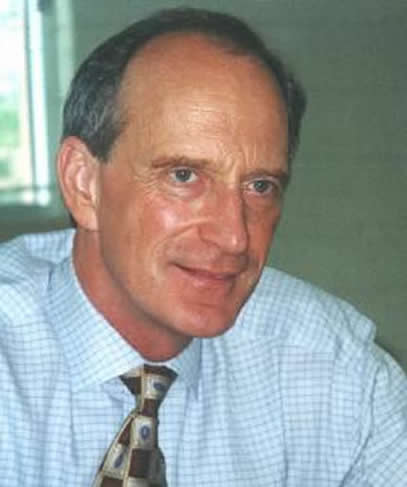
Are humans clever enough primates to use that cleverness beneficially? Denis Hayes isn't sure. He is the man who helped launch America's environmental movement as national coordinator of the first Earth Day in 1970 and continues to coordinate it, 30 years and 180 countries later.
We've made enormous strides since 1970 -- the Clean Air Act, the Clean Water Act, the Endangered Species Act -- addressing immanent, visible threats to people's health and well-being, he reminds us. And in the same breath, he insists we've made little or no progress in most of the big threats to the planet. The real question, as he sees it, is whether the techniques which were very effective in addressing local, statewide, regional and national issues can be applied in an international framework.
Take global warming. Virtually all scientists in geophysics or climatology accept the fundamental reality that humans are causing changes in the earth's climate. What debate there is centers on the magnitude, pace and consequences we face. (So few scientists maintain otherwise that Mr. Hayes knows them all by name and funding source.) So we know global warming is a threat. But in the short term, nobody wants to be the first to do anything to address the issue, Mr. Hayes says. The United States is by far the biggest contributor of carbon dioxide and other green house gases. But even if America stopped producing CO2 altogether next year -- just shut it down -- 75% of global warming would continue. While Mr. Hayes is confident that the proper role of government is to set the ground rules, the current Congress is unprepared to make any kinds of strides until we get commitments out of China and India. China and India are unwilling to budge until the United States shows good faith. And powerful economic interests work on both sides to keep fossil fuel consumption high, Mr. Hayes contends. So all that changes is the climate. What's a body to do? Denis Hayes has been answering that question for 30 years and counting. The second most important thing we can all do, he suggests, is cut down on the amount of electricity we use. Over 4/5th of America's electricity comes from burning fossil fuels -- coal and oil -- which generate green house gases. (Southern Company's Georgia Power tells its customers that more than 75% of its electricity comes from coal.) The SINGLE most important thing? Get out of Sports Utility Vehicles (SUVs) and light trucks. Or at least choose the "best in class" if you really need one. Yes, the threats to the planet are real and frightening, but that's not the end of the story, says Denis Hayes. British Petroleum is now "Beyond Petroleum" and the largest manufacturer of solar cells in the world. The Chairman of the Board of Ford Motor Company says he will preside over the death of the internal combustion engine. And David still sometimes does beat Goliath, even on global environmental issues against extraordinary odds. Besides, what's the alternative? It's one planet. [This Program was recorded September 15, 2000, in Oberlin, Ohio, U.S.] |
|
Conversation 1 Denis Hayes recalls for Paula Gordon and Bill Russell the beginning of America's awareness of environmental threats to human health and well-being. Mr. Hayes distinguishes this movement from America's older concern for conservation. He reminds us of humans' global interdependence and gives examples of great successes for self-un-doing (not self-fulfilling) hypotheses since 1970.
|
Conversation 2 The conversation's setting (the Lewis Environmental Studies Center at Oberlin College in Ohio) is described as the first step for what could be an energy-self-sufficient and carbon dioxide-neutral campus by 2020. Mr. Hayes expands, with a variety of examples of young people's power. He recounts the systematic derailment between 1978 and 1994 of the earlier movement to seriously address energy problems. He describes the environmental movement's recent past. Government's role in advancing technology is examined, exemplified by automobiles and the computer chips central to the technology which powers today's robust economy. Mr. Hayes offers his view of the proper role of government.
|
|
Conversation 3 America's Revolution was fought to escape a landed aristocracy, Mr. Hayes reminds us, linking today's increased concentration of wealth to the need for campaign finance reform and environmental concerns. He reminds us to take pride in the environmental movement's very real accomplishments of the last 30 years, then focuses on how very much remains to be done, with examples of both. Global warming is Mr. Hayes' example of a deep international challenge where no one wants to be first in getting serious. He reveals cynical tactics of those favoring the energy status quo. He gives examples of how sometimes David still beats Goliath, even in global face-offs.
|
Conversation 4 Mr. Hayes describes a variety of reasons men and women get involved in environmental issues. He notes that mistakes made by environmentalists tend to be in understating (not overstating) the severity of the threats we face. He offers examples. He projects how things might be in the next 15 to 50 years, confident the major changes ahead cannot be predicted. He considers potential disasters which could result from unintended efforts to increase competitive advantages, with a vivid and sobering example of how human cleverness could be our undoing.
|
|
Conversation 5 Urging us not to be paralyzed by what we face, Mr. Hayes gives a series of examples of what individuals can do that will make a difference in addressing climate change. He explains why using less electricity is the second most important thing we can do to slow climate change. (Power companies rely heavily on burning coal and oil to generate electricity.) THE most important thing is to abandon Sport Utility Vehicles (SUVs), he says, offering viable alternatives. Mr. Hayes calls "irrefutable" the evidence that we have good alternatives to our current heavy dependence on oil and coal. He assures us that private gain, not the larger economy, is being challenged. He gives examples of how major industries are working to wean themselves from fossil fuels.
|
Conversation 6 Reminding us of Senator Gaylord Nelson's central role in founding Earth Day, Mr. Hayes explains its enduring power. He recalls the role Earth Day played in establishing curbside recycling across America. He calls us all to action, even as we continue to learn.
|
|
Acknowledgements Acknowledgements We met with Denis Hayes at the dedication of the Joseph Adam Lewis Environmental Center at Oberlin College. Hundreds of people, led by Professor David Orr, were involved in the creation of this remarkable building. They all have made a difference. Now, let the work begin. The Office of College Relations greatly assisted in making it possible for us to record a series of conversations during the course of the celebratory weekend. We particularly thank Vice President Al Moran, his able assistant Darla Warren and the incomparable Marci Janas. British Petroleum, alas, has not lived up to its rhetoric. |
Related Links:
Because the challenges to the Earth are many, complex and life-threatening, we have produc ed a wide variety of programs on the Earth and our relationship with it. Guests have included: Rchard Leakey, Claudine André, David Orr, Karl Henrik-Robèrt, Edward O. Wilson, Ray Anderson, Janiine Benyus, Alexandra Fuller, Paul Hawken, Robert F. Kennedy, Jr., Sy Montgomery, William Calvin, Carl Safina, Bill McKibben, David Suzuki, Riki Ott, and Mike Tidwell.
|