the Centers of Worlds
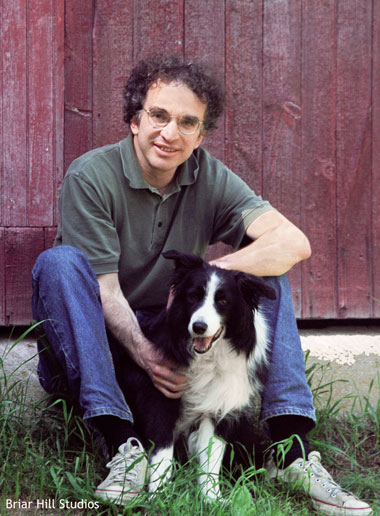
Howard Mansfield
. . . essayist and reporter. Known for unusual and thought-provoking insights, Mr. Mansfield is author of five books including The Bones of the Earth, The Same Ax Twice and In the Memory House. He contributes to publications including the New York Times, American Heritage and Historic Preservation. He and his writerly wife Sy Montgomery are known in their home state of New Hampshire for many things, including the fame gained by their late pig, 750 pound Christopher Hogwood.
 1:17
1:17
|
When was the last time you felt real? When the building in which you were or the tree under which you sat at the bend in the river was "enough"? When you had a sense of the sacred and could identify the center of your own world, your axis mundi? Howard Mansfield believes a key source for today's general sense of disquiet is the lack of this axis mundi. He also thinks it accounts for some of why Americans are all-appetite, craving many centers and many places because we lack a central "landmark" in our lives, a fundamental connection to the earth. This, he says, is an ancient urge we all share, quietly calling us to a revolutionary idea: Celebrate the ordinary. Look at things. And by looking at them, really start to see them. Lift up the everyday from invisibility. Remember, he says, for millennia and up until now, trees, rocks, the few people we knew, the animals around us, the sky by day and night was our world by day and by night in dreams. Those things -- sticks and stones -- were holy. Sacred. He reminds us of the time when all religions treated the landscape as sacred, from special trees to creek-side shrines. Many cultures still regard stones as the bones of the earth, he says with a nod to the title for his latest, lyrical book of essays. Stones are considered animate and alive, a belief he thinks is still inside of just about everybody. That sense is what he believes calls forth our response to various places we decide are our homeplace ... our axis mundi. The place from which we organize our world. Even as most of us live amidst the noise and clutter for which Mr. Mansfield offers us an alternative, he reports this longing to be connected to the earth is bubbling up in unexpected places, an outbreak of an old-time affection for the land, a pre-Christian sacred attachment to sacred sites. Ever the story-teller, Mr. Mansfield draws his examples from as far afield as Switzerland and Lithuania, New England and the American South. Have you noticed those homemade monuments to a fatal accident? They are an axis mundi for someone, an irresistible response to unnatural cemetery rules. We miss those lambs and mounds of earth and the chance to tend to flowers at the site, he believes. Mr. Mansfield has witnessed Americans' tremendous disquiet amidst the ersatz. While we all love kitsch, he says, it's not real, doesn't get at the heart of that for which we genuinely hunger, is never "enough." Mr. Mansfield's alternative? Remember who we are. Respect the sacred that has been lost -- the earth and our connection to it. When we displace the earth, he says, cover it up with asphalt, poison it with chemicals, despoil it, we break an essential connection with all of life. Isn't it time we "get real"? [This Program was recorded December 11, 2004, in Atlanta, Georgia, U.S.]
|
Edited Excerpts of the Conversation:
 2:18
2:18