The Paula Gordon Show
VIRUSES VS HUMANS ö a Fair Fight?

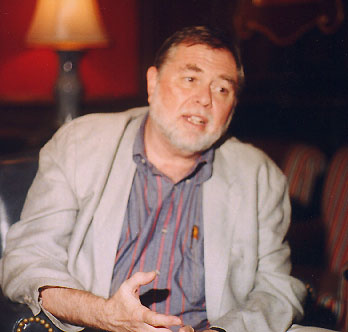
Dr. C.J. Peters

      . . . . has worked with infectious diseases for three decades with the Centers for Disease Control (CDC), the U.S. Army and the U.S. Public Health Service. He is currently the Chief of Special Pathogens at the CDC in Atlanta, Georgia. He was formerly the Chief of the Disease Assessment Division at the United States Army Medical Research Institute of Infectious Diseases (USAMRIID) which established ãThe C.J.Peters Awardä in his honor. ÊThe Award says, in part, ãIn the inception and granting of this award, we honor Colonel C.J. Peters, Medical Corps, a brilliant and innovative scientist, scholar and physician...whose work is a lesson not only in science, but in humanity.ä

      Dr. Peters was the head of the unit that contained the Ebola virus outbreak in Reston, Virginia, about which The Hot Zone was written. Dr. Peters wrote Virus Hunter: Thirty Years Battling Hot Viruses Around the World with bestselling co-author Mark Oshaker. It is published by Anchor/Doubleday Books.

Excerpts3:03 secs

      There is a real danger -- right now -- that a viral epidemic could spread worldwide, virtually overnight. ÊUnsuspecting humans traveling from one part of the globe to another could easily be the carriers. ÊA pandemic could come from a familiar virus weâve lulled ourselves into thinking is ãconquered.ä Or it could come from one of a host of new viruses which are emerging worldwide. Even more chilling is the danger that terrorists might use biological agents to devastating effect. It wouldnât be hard.

      Dr. C.J. Peters, Chief of Special Pathogens at the Centers for Disease Control (CDC) in Atlanta, is no alarmist. But he worries that people think viruses will somehow ãjust go awayä with the advance of medical science and technology. The AIDSÊepidemic has taught us such assumptions are dead wrong. There are people alive today who remember when a worldwide influenza outbreak killed more people in one year -- 1918 -- than any other single event of the twentieth century (including two World Wars, the Holocaust and Stalins purges). Today, infectious diseases are the number one killers in the world. Even when a virus is not lethal or only affects other species, it can have catastrophic effects on a communityâs life, economy and public welfare.

      Dr. Peters is Americaâs leading virus hunter. He headed the unit that contained the outbreak of the Ebola virus in Reston, Virginia. ÊItâs just one of the very scary stories he tells in his riveting book Virus Hunter. He compares hunting viruses to being a homicide detective, citing ãthe ability to listenä as the epidemiologistâs greatest single talent. ãGet the right clues and gather the samples systematically. Then the lab can solve the mystery. The disease itself is the best teacher. It takes more than hood lines, space suits and blowers to make a safe working environment. ÊYou need people with the understanding, preparation and experience to conduct themselves effectively in the presence of potential killers.ä

      Of all the sophisticated medical techniques in use today, simple Îbarrier nursingâ -- always wearing a mask, gown and glove while attending the sick -- is among the most important.

      ãBe Preparedä sums up Dr. Petersâ call. ãWe canât afford to be arrogant as a species.ä

      This program was recorded at The Commerce Club before an invited audience.

Conversation 1

Dr. C.J. Peters, Chief of Special Pathogens at the Centers for Disease ControlÊ(CDC), describes the nature of viruses to Paula Gordon and Bill Russell. Viruse's reproductive strategy facilitates them jumping successfully from one species to another. Viruses do not necessarily make their host ãsickä but they cannot grow independently. ÊThey must infect and take over their host cell. A virus may not be at all harmful in one species but great troublemakers in another.


Conversation 2

Itâs a big mistake to think humans are the center of the universe and will always be here. Dr. Peters talks about the complex relationships among and between species, amplified now that humans are causing a host of rapid changes.

We stopped looking at infections in the 1960âs when multiple antibiotics were developed. Then we seriously eroded antibioticsâ effectiveness and weâre beginning to pay attention again.

Weâre also learning that global ecological changes create opportunities for viruses. CDC is responding with ãsurveillanceä which focuses the expertise of people from a number of disciplines -- microbiology, epidemiology, sociology and so forth -- on extraordinarily complex challenges.

Tracking down the principles of a virus combines old fashioned detective techniques and sophisticated modern technology. ÊResearchers are hampered by the sharp decline in autopsies in America.


Conversation 3

ãMegacitiesä worldwide pose a ãterrible problem.ä Dr. Peters describes the complex interactions of people, plants, environment, animals, insects, weather and rapid change. ÊHe is concerned that we are not thinking about long-term problems, those of the next 50 years.

He describes our transition from hunter-gatherers -- when there were not enough of us in any one place to sustain virusesâ needs -- to the agricultural age which allowed people to live in concentrated areas with animals we were domesticating at the same time. Viruses from those animals (like measles) jumped to humans. Humans carried them across the planet as we spread out.


Conversation 4

Dr. Peters talks about his 30 years chasing hot viruses with new viruses emerging all the time. ÊHe tells the story of the Ebola virus and warns of the potentially deadly combination of rapid human travel and viruses which can be carried by organisms as common as mosquitoes.

Tracking down a disease is extremely complicated with complex causes. Entire ecologies may be involved. Dr. Peters describes how the upcoming El Nino effect may work with wind, weather, and crops to greatly benefit rodents who carry hantavirus. ãThese things are too complex for us to get a handle on yet.ä


Conversation 5

Dr. Peters describes biological terrorism asÊãcheap, easy and take less expertise than is needed for nuclear terrorism.ä And biological weapons will work. We have not yet found a balance between being unduly alarmed and the need for the very real threats to hold our attention for longer than a ãsound bite.ä ÊWeâre beginning to help integrate ãfirst respondersä -- fire departments, police and civilian physicians.

Dr. Peters describes the ãjoltä Desert Storm gave the military. Heâs concerned people will let a research capability wither, then demand to have a solution ãnow,ä regardless of the price.


Conversation 6

We do have a problem. At the same time, people should sleep at night. ãBut when you wake up, you should worry a little. Then get Îinsurance,â starting with good Îsurveillance,â worldwide. There is nothing local about any of these diseases. ÊThey may be local today, tomorrow they wonât be.ä


Acknowledgements

The Commerce Club graciously provided its Library for this program. We thank them.

A group of members of The Commerce Club who are retired and young members who also belong to The Clubâs Commerce Society joined us as we recorded. After they observed our conversation with Dr. Peters, these guests also had a chance to talk with Dr. Peters. Weâre pleased all of them joined us.

We are grateful to Susan Peters who arrived at The Commerce Club, packed and ready to go directly to Hartsfield International Airport. We hope her academic meeting in Europe was as enlightening for her as our conversation with her husband was for us.

Our thanks to Anchor Books/Doubleday for bringing Dr. Petersâ book Virus Hunters to our attention.


Related Links:
C.J. PETERS, M.D.sâ book Virus Hunter
Centers for Disease Control and Prevention
Anchor Books/Doubleday


Quick buttons

© 1998 The Paula Gordon Show.
All materials contained on this website are
copyrighted by The Paula Gordon Show and may
not be used in any way without the express,
written consent of Paula Gordon.
Since Aug 2, 1997 this page has been accessed times.