The Paula Gordon Show Logo The Paula Gordon Show
Hyper Efficient

Amory Lovins

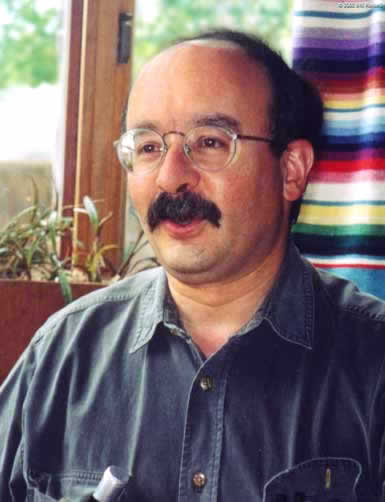
     ... Rocky Mountain Institute (RMI) co-founder and CEO (Research); Chairman of the Board of Hypercar, Inc. and a former physicist. Mr. Lovins is a pioneer known world-wide for his ideas about alternative resource production and use. His publications include Natural Capitalism, co-authored with Paul Hawken and Hunter Lovins, and Small is Profitable. Mr. Lovins' work across public and private sectors promoting more effective uses of and innovations in resource generation and conservation has generated many major awards around the world.

Excerpts3:38

Successful companies will take their design from nature, their values from their customers and their discipline from the market place, says Amory Lovins, co-author of Natural Capitalism: Creating the Next Industrial Revolution. They will also require a world where we rethink “security,” says this co-author of “Brittle Power,” the definitive unclassified study of domestic energy vulnerability.
Mr. Lovins and RMI are known around the world for innovative approaches to efficient and restorative uses of resources -- particularly energy -- to create a secure, prosperous and life-sustaining world. This former physicist co-founded the non-profit Rocky Mountain Institute (RMI) in the early 1980s and continues as their CEO (Research). He is also Chairman of Hypercar, Inc.

He sees today’s pressing question as: How do we use the latent and emerging potential of our tri-polar world of government, business and civil society? For starters, be glad. This spread of power gives us more ways to make things happen. Since the three often work in pairs, find ways any two can address the deficiencies in the third. Speak to the motives of each group -- governments want to be re-elected: businesses seek more profit and less risk; civil society wants better lives for kids and communities. Don’t fight with your opponent, dance with your partner. It all makes sense and it all makes money, he says, so what are we waiting for?

Mr. Lovins and his co-authors focused “natural capitalism” on business leaders because they’re the ones who can save the world fastest and make money on the deal, Mr. Lovins remembers. He delights in putting “the fear of Adam Smith” into companies, spreading ideas of natural capitalism through competitive forces -- innovators’ rivals follow suit or lose market share. (Natural capitalism adds “nature” and “people” to industrial capitalism’s narrowly defined idea of capital as “financial” and “physical.”) Mr. Lovins demonstrates the approach’s success with a wealth of stories where companies achieve stunning competitive advantage, people in organizations are more happy, motivated, creative and effective, and customers are happier. It’s all good business and profitable, too, he smiles. Hypercar, Inc. is a promising example.

Mr. Lovins calls for the non-violent overthrow of bad engineering -- he wants to change both how engineering is taught and how it is practiced. Whole-system optimization is his solution. The ideas that work in businesses also work in buildings -- Rocky Mountain Institute’s home in Snowmass, Colorado, is so energy-efficient that the staff regularly offers surprised visitors home-grown bananas and papayas in a building that has no furnace.

Of course, all of this requires a level of individual and societal security. That, Mr. Lovins is convinced, means we have to rethink what “security” means and how we get it. His prescription? Start with conflict-prevention or avoidance. Follow with conflict resolution. Then, if all else fails, offer non-provocative defense to defeat aggression without threatening others. In short, remove the incentive to go to war and you have an environment in which natural capitalism can flourish.


[This Program was recorded August 19, 2002, in Snowmass, Colorado, US.]

Conversation 1

Amory Lovins tells stories from his mentors to Paula Gordon and Bill Russell. He describes his approach to solving problems we don't need to have.

Conversation 1 RealAudio6:31


Conversation 2

Moving beyond obsolete ideas of “conservative” and “liberal,” Mr. Lovins reviews the differences between “Greens,” “Reds,” “Blues” and “Whites.” He gives examples from the National Energy Policy Initiative of how people with widely different perspectives can work together effectively for a common good. He points to his “high altitude bananas” at the Rocky Mountain Institute’s Colorado energy-showplace and describes how such an environment is also possible in very hot places. He summarizes the importance of design integration, optimizing buildings as systems, and rethinking outdated engineering pedagogy and practice.

Conversation 1 RealAudio11:44


Conversation 3

The vital role of engineering is considered, with vivid examples of the importance of getting whole-system optimization into buildings’ design as well as construction. With 50 practitioners and with colleagues in 50 countries, Mr. Lovins describes people creating and practicing “natural capitalism,” which he outlines. He tells why he and his Natural Capitalism co-authors picked business leaders as their primary audience. He describes “Aikido politics” and gives examples.

Conversation 1 RealAudio10:56

Conversation 4

Mr. Lovins explains why it is important that he and his colleagues go beyond procedures, processes and marketing to work for cultural changes within businesses. He gives pithy examples of the differences between leadership and management. He articulates why he is convinced ecological economics -- where the economy is a wholly owned subsidiary of the environment, not the other way around -- is a much better approach than a more limited environmental economics, which reduces nature, culture and community to balance sheet items. He gives examples of why “natural capitalism” is good business and is essential to successful businesses.

Conversation 1 RealAudio10:11

Conversation 5

Problems created by automobiles are a wonderful engineering challenge, Mr. Lovins notes, then describes how he and his colleagues have addressed them. He outlines the dilemmas faced, considers the high costs of early automotive decisions, and describes how Hypercar(TM) technology solves the problems. He summarizes Hypercar’s advantages: advanced composite bodies fabricated at high volume and low cost. These advantages offer the auto industry solutions while simultaneously “putting the fear of Adam Smith” into them. Mr. Lovins describes the technology’s enormous potential impact. Whoever captures this competitive space, he predicts, will have an extraordinary competitive advantage as a company and country.


Conversation 6

While currently focused on private sector competition, Mr. Lovins describes the continuing need for positive public policy. He describes security as “freedom from fear of privation or attack” and describes the serious vulnerability of America’s infrastructure. He outlines an alternative security strategy which would make people feel more, not less, secure while removing current incentives for war.

Conversation 1 RealAudio6:36


Acknowledgements

Mr. Lovins graciously welcomed us to Rocky Mountain Institute (RMI) during one of his rare visits home. We delighted in the opportunity to talk with him amidst the bananas, papayas and ferrets and we thank him. We applaud his and his colleagues’ ongoing and vitally important work creating viable alternatives for the earth’s future. We look forward to continuing our conversation on many fronts.

Our thanks, also, to Missy Morgan, who coordinated our visit and made us welcome despite her own active recovery from the accident for which her horse was not responsible!

A special “thank you” to James T. (“Jimmy”) Mills, Emeritus Chairman of the Board of RMI, for introducing us to Mr. Lovins. Mr. and Mrs.Mills’ early leadership in creating alternatives to and opposing the nuclear generation of power is a shining example from which we all can learn.

And, as always, we treasure our friendship with industrial leader and visionary, Ray C. Anderson, of Interface, Inc. and thank him for all he has done for us and does for us all.

Related Links:

For a wealth of useful and accessible information, take advantage of all that is available at the Rocky Mountain Institute (RMI) website.


There is information on that site about the Hypercar(TM).


The report from the National Energy Policy Initiative is also available on the web.


"Climate: Making Sense and Making Money" to which Mr. Lovins referred in this Conversation is available as a pdf.

Natural Capitalism:  Creating the Next Industrial Revolution is published by Back Bay Books, a division of Hachette Book Group.  There is also a website devoted to natural capitalism.

Paul Hawken steadfastly continues to work for justice and the environment.   And Ray Anderson is continuing to provide leadership in the corporate environment as well as the envirnomental community.

           Quick buttons
© 2007 The Paula Gordon Show.
All materials contained on this website are copyrighted by The Paula Gordon Show and may not be used for any commercial purpose without the express, written consent of Paula Gordon. Non-commercial use is permitted and encouraged provided that credit is given to The Paula Gordon Show, appropriate urls cited, links are provided where possible and meaning is not altered by editing.